From Italy to the Underground: Shining Ain’t Simple Redefine Instrumental Storytelling on The Geometry of Rain
Shining Ain’t Simple isn’t a solo act, it’s a creative partnership. Founded by Italian artists Jordan Aramani (Joes) and Jarod (Jay), the collective moves between production, songwriting and performance, building projects that balance atmosphere with identity.

Joes (left) & Jarod (right).
On their latest release, The Geometry of Rain, Jordan steps forward to lead a fully instrumental body of work, a nine-track composition project shaped by piano, strings, woodwind and subtle house-influenced rhythms. Stripping away vocals, the album focuses entirely on mood, harmony and emotional space.
We spoke with Jordan about the philosophy behind the project, the decision to remove lyrics, and how Shining Ain’t Simple are shaping their own cinematic language.
The Geometry of Rain is an entirely instrumental project. What inspired you to create a body of work without vocals, and how did that shape your approach to composition?
The Geometry of Rain was conceived as a space where music could speak without words, rooted in a simple belief: music is subjective, and its power comes from personal expression rather than trying to be “objectively” correct.
Although Shining Ain’t Simple usually works with vocals, I’ve always been fascinated by how instrumental music can evoke complex emotions — sadness, peace, tension, or release — without needing to explain itself. The album grew naturally from sketches originally developed for Diary, our upcoming vocal project. By removing lyrics, the focus shifted entirely to mood, harmony, and movement.
I drew inspiration from artists and composers who shaped my musical sensibility — Lonnie Liston Smith, John Coltrane, Bill Evans, Ennio Morricone, Piero Piccioni, Yoko Kanno, and Ryo Fukui — studying how they used melody and space to tell stories. Each track was built as an emotional environment rather than a traditional song, allowing listeners to project their own feelings into the music.
The album blends piano, strings, woodwind and percussion with house-influenced rhythms. How did you balance acoustic instrumentation with electronic ideas?
My approach comes from two parallel worlds: beat-making and club culture. Growing up as a DJ, I was heavily exposed to house and progressive music, where repetition, gradual evolution, and subtle rearrangements are essential.
For this project, I began composing on piano, then expanded the harmonic ideas through strings, woodwinds, and percussion. Once the instrumental layers were defined, I treated them almost like electronic loops — reshaping and reorganising them across different sections, following the logic of progressive electronic music.
This process isn’t about objective perfection. It’s about letting instruments, textures, and rhythm coexist according to feeling. The three piano solo tracks are the purest expression of this approach: fully improvised, intimate, and raw, untouched by rules.
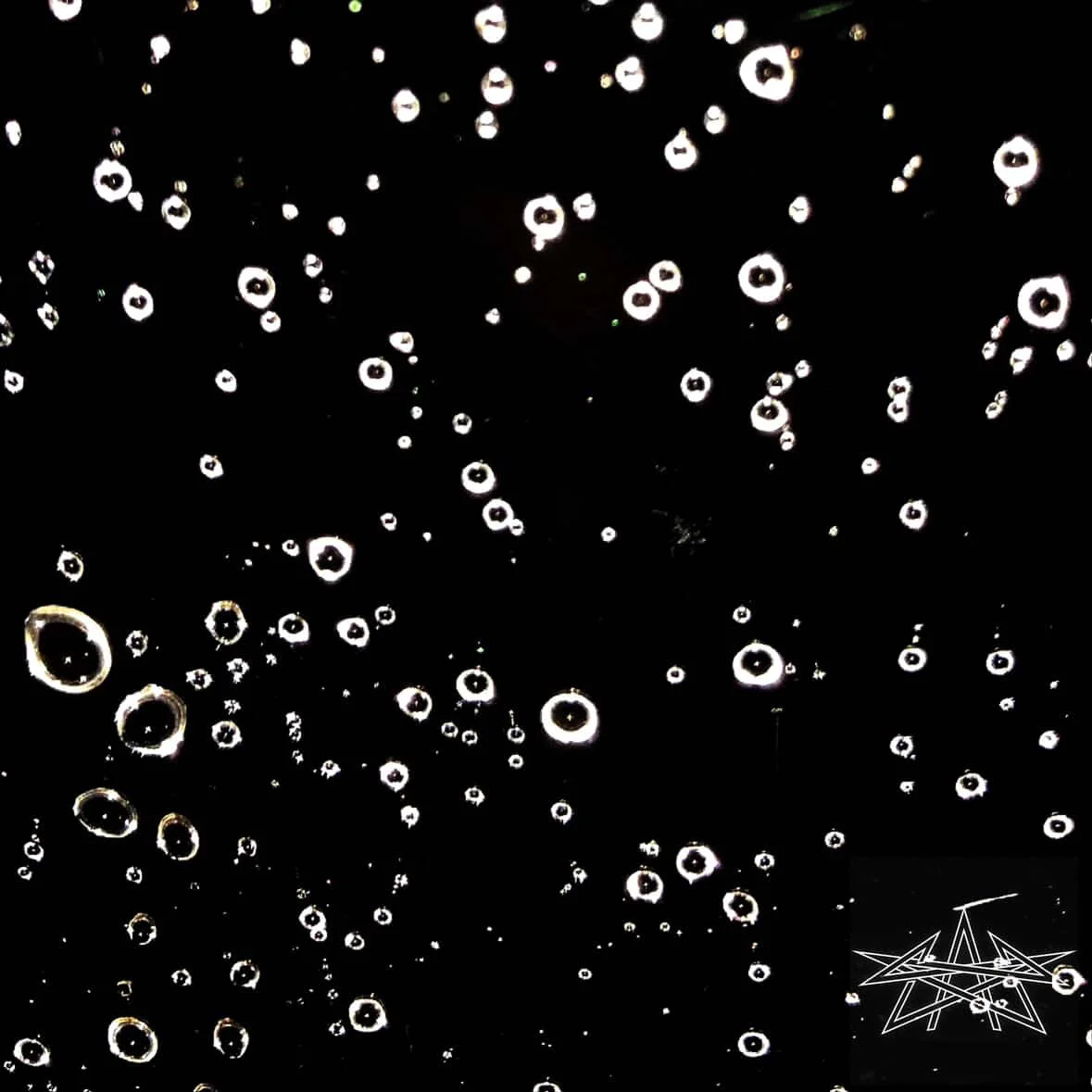
The Geometry of Rain (official artwork)
There’s a very calm, immersive quality across the album. What emotional journey were you hoping to create across the nine tracks?
The Geometry of Rain is conceived as an emotional journey — almost like the soundtrack to a film or an anime. It reflects a wide spectrum of human experiences: loss, introspection, fragility, but also connection, resilience, and warmth.
The album unfolds like a storm:
alba sets the calm before it arrives
cloudrider introduces gathering tension
raindrops in a tea cup and imperfections mark the first fall
the storm’s silent eye and surfing on rainbows represent suspension
through my eyes and Bleeding on a Lotus bring the storm to its peak
終わり closes the cycle
Rather than guiding the listener toward a fixed interpretation, the album leaves space for everyone to find their own emotional narrative.
Were there any moments during the creation of the album that surprised you or shifted its direction?
One of the biggest surprises was the impact of wind instruments. I’ve always loved the combination of piano and strings, but when trumpets and trombones entered the arrangements, the music gained a more solemn, almost ceremonial quality.
Another pivotal moment was the introduction of the shakuhachi flute on Bleeding on a Lotus. That sound immediately evoked a strong visual atmosphere, reminiscent of traditional Japanese settings, adding a cinematic layer. These moments reinforced the album’s core philosophy: trusting intuition over formula and letting the music speak for itself.
What do you hope listeners take away from The Geometry of Rain, and how does it fit into the wider identity of Shining Ain’t Simple?
I hope listeners can slow down and let the music become a personal space — a soundtrack they associate with their own memories, emotions, and moments of reflection.
Shining Ain’t Simple is an evolving project. This album represents one side of our identity, while future releases will reconnect with vocals and narrative songwriting. What remains constant is the intention: creating music that is subjective, honest, immersive, and deeply human, without forcing a single interpretation.
Music should never be homogenised or forced into objectivity. Its value lies in how it resonates differently with each person.
The Geometry of Rain is available now on all streaming platforms. Listen here.